Miraijin —2026—
The Gravity of a Small Screen — ミライジン —2026—
| Year | 2026 |
|---|---|
| Materials | Iron, rust, black velour, smartphone, LED light |
| Location | The National Art Center, Tokyo (Genten 2026) |
| Format | Installation |
This installation re-frames the present of 2026 as a relic of the past, excavated from the future. The smartphone is no longer a mere communication device: it is a "small gravity" that draws in human attention, time, desire, and relationships.
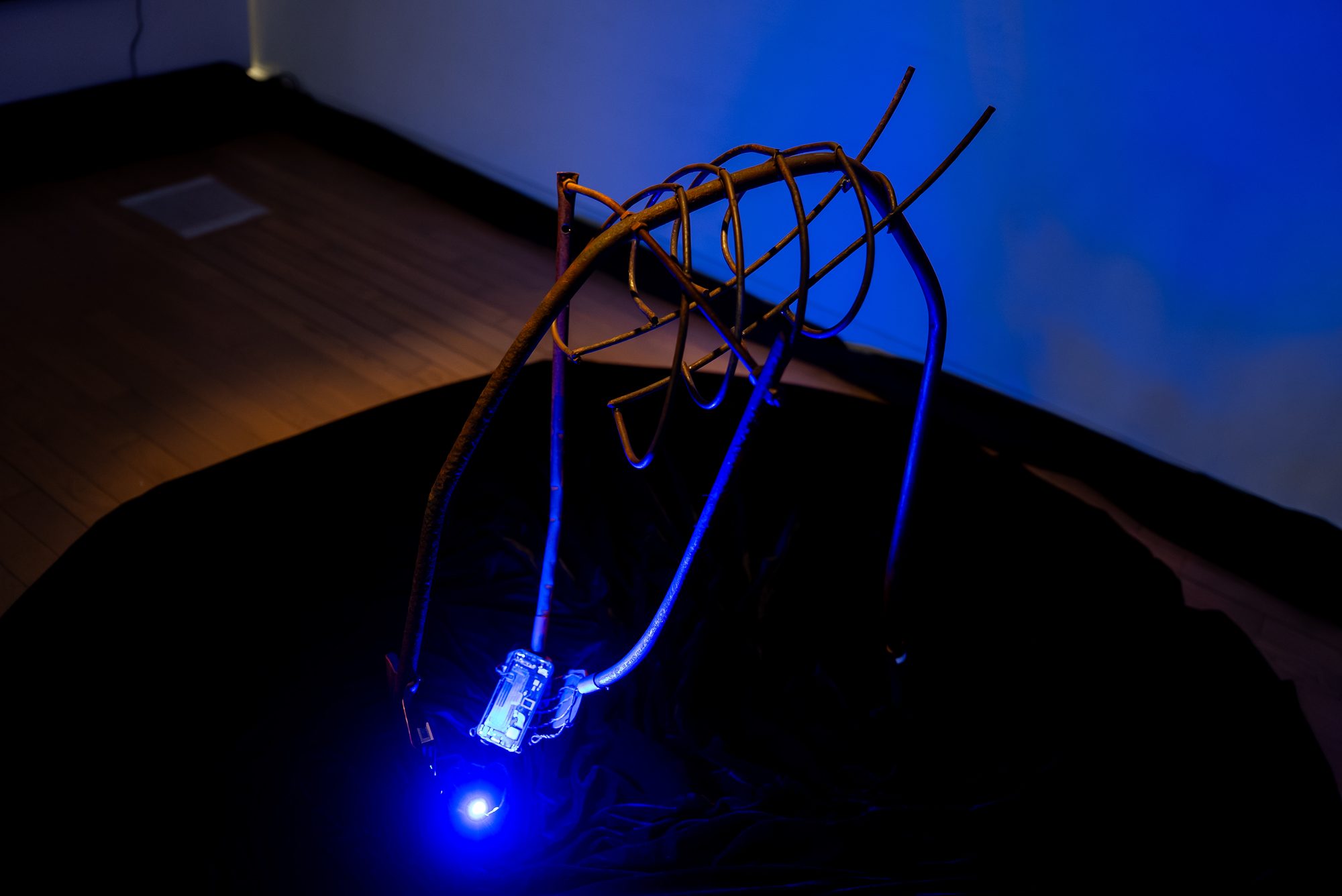
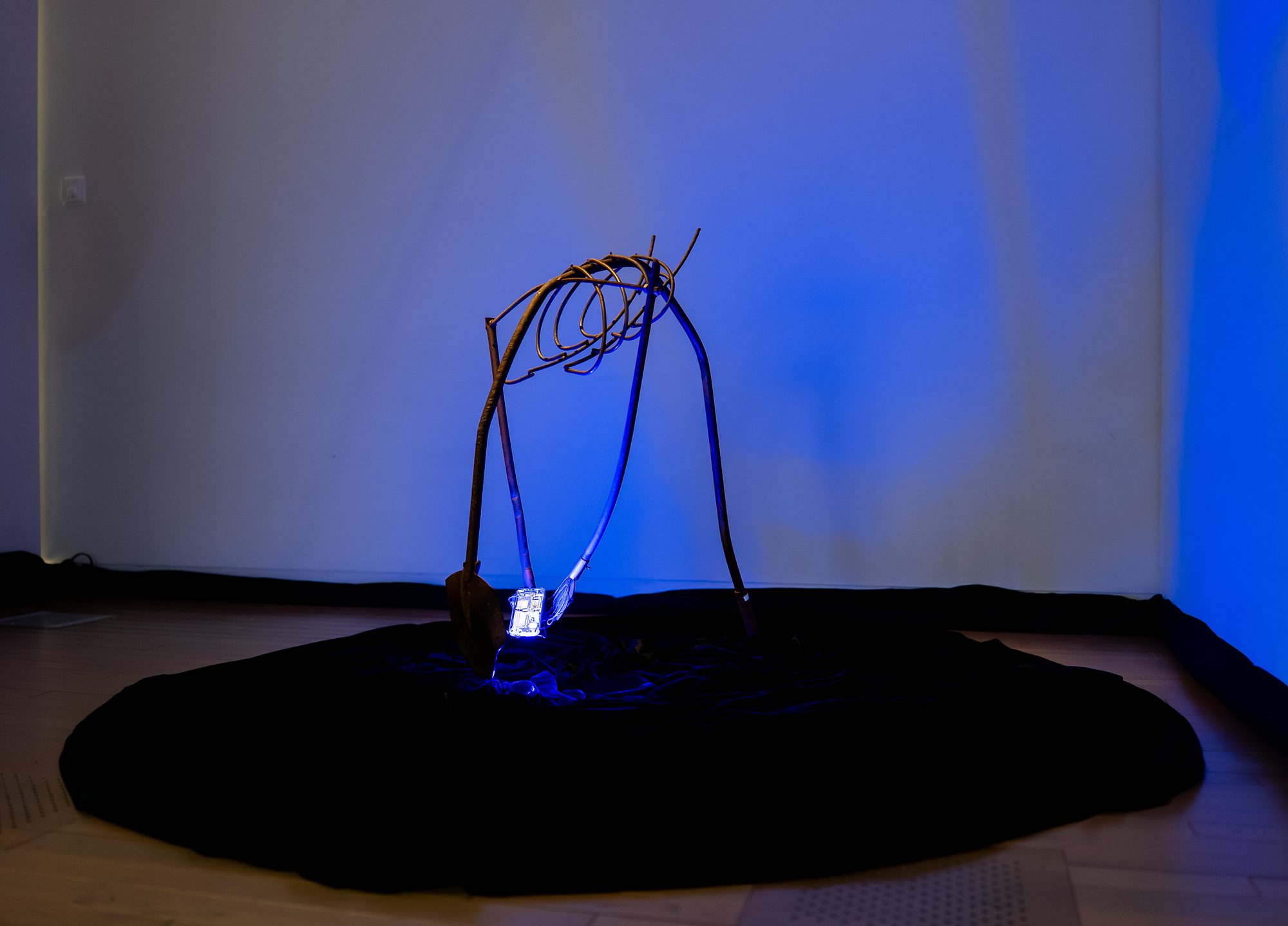
A vortex of black velour spreads across the floor toward a screen glowing pale at its center. The velour absorbs light, erasing the depth of the space and producing the sensation of a dark hole underfoot. That soft, deep black is the darkness of information spreading inside the screen — a visualization of the gravity that pulls us in without our noticing.
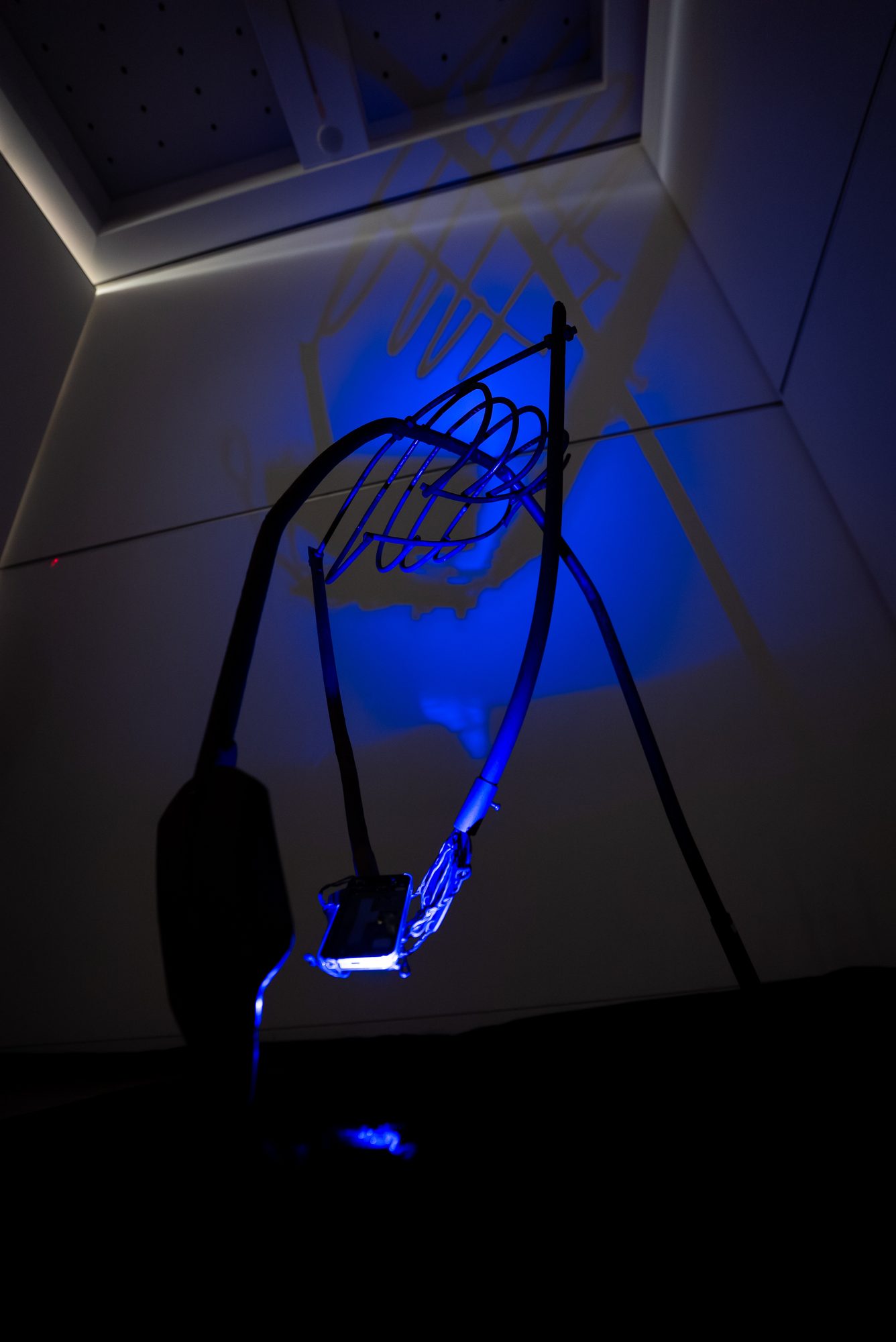
The iron body standing there bends deeply forward, as if a moment away from being swallowed by the screen. The head hangs; the arms dangle without strength — a figure that looks almost like a ruin of a person. Iron is the material that carried modernization from the Industrial Revolution onward. With iron, humans extended the world, becoming faster, capable of more. Yet that development also folded the human body into systems of efficiency, reshaping it to the rhythm of machines. Today the smartphone is the most intimate embodiment of that efficiency.
The more convenience extends our lives, the deeper our gaze sinks into the small screen, and our bodies deform to fit the device without our noticing. The rusted iron body is a trace of 2026 seen from the future — an image of ourselves seeming to regress at the far end of technology.
This is not a work made to reject technology. It is an attempt to give a single bodily form to the distortions — the bodily senses and rhythms of daily life eroding in the shadow of convenience. Standing outside the vortex, viewers realize that they, too, are already inside this gravitational field. It is at once a warning about smartphone dependence and a preventive-medical "antithesis of care": a way of noticing changes in daily life before disorder appears.
Special Thanks — Production: Eiji Oana, Kazumichi Hizawa, Hiroki Sato, Maki Sato, Katsushi Takeyama, Mariko Kiryu, Naoyuki Hamaya, Takashi Kuwajima / Production adviser: Nozomu Kubota / Lighting adviser: Yuto Kurokawa