A 50-Metre Errand
50mのおつかい
| Year | 2026 |
|---|---|
| Materials | Photographs, text, conversation, records |
| Location | Tokyo |
| Format | Social practice / documentation (January–March 2026) |
January 2026
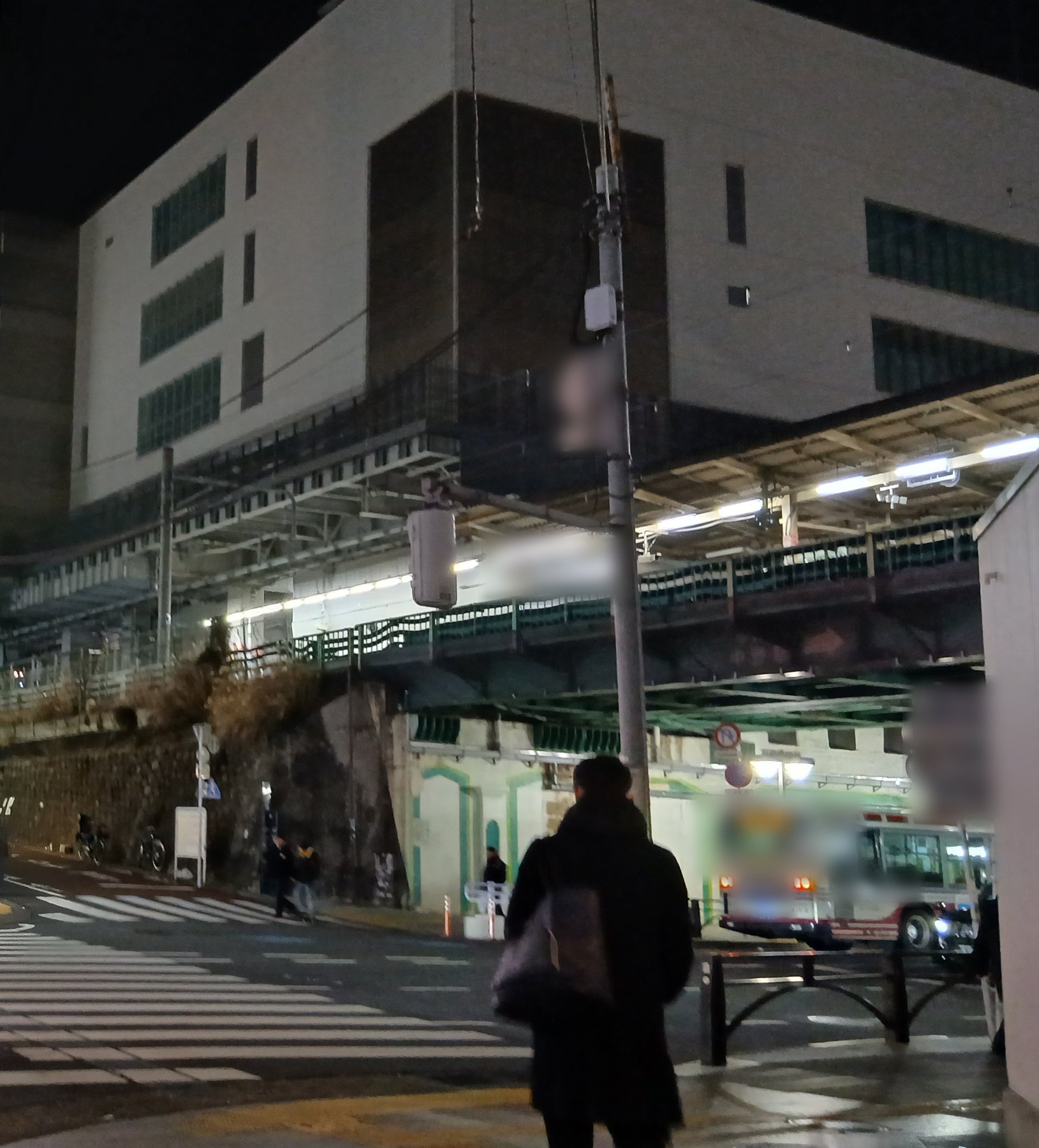
With the new year, I started going to the gym to get my health back in order. On the way there, on the street by the station, was a woman seated in a wheelchair. Grey-streaked hair, a blanket over her lap like a lap robe, head lowered, sitting perfectly still.
I don't know how long she had been there, or whether she stayed all day. But I saw her every time I passed.
She was on my mind — and still, I was one more person walking by.
27 January 2026 (evening)
That day she was beside the guardrail under the elevated tracks. She, who rarely moved, beckoned to me. As I came closer, a young man standing next to her was saying, "It's money, right? Money is what you want." She frowned and did not answer him.
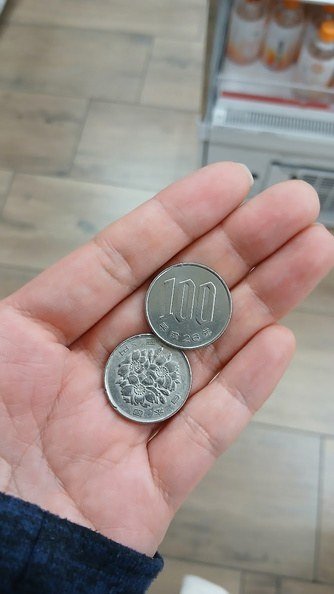
When I spoke to her, she took 200 yen from her pocket and asked me to buy a hot milk tea from the convenience store across the way.
As I took the coins, the brief touch was enough to tell me her hands were sticky. I bought the milk tea and handed it over with the receipt and change. "Shall I open it?" I asked. "Leave it as it is," she said, and set the milk tea down among the blankets. Perhaps she wanted to warm her legs.
She thanked me, and I left. Even after the errand, that sensation stayed in my palm.
28 January 2026
I spoke about what had happened on my audio broadcast. I thought about "a society that looks the other way" and about what support really is.
30 January 2026
To keep a record of this, I began photographing her situation and the scenery around her. Sometimes from far away, sometimes from close by.
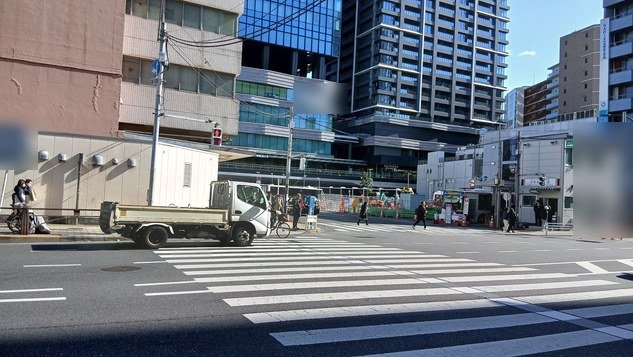
From where she was to the police was roughly thirty metres. Not a distance beyond sight: the entrance lay directly opposite, with perhaps two officers. She was there, in their line of vision. She existed — and yet it was as though they had nothing to do with it.
Not indifference, but an unfeeling. As if they were keeping themselves from feeling a heart that aches.
1 February 2026 — Campaign speeches
It was election season. A campaign speech with two supporters; those appealing for votes kept a certain distance from her — about five metres, on either side.
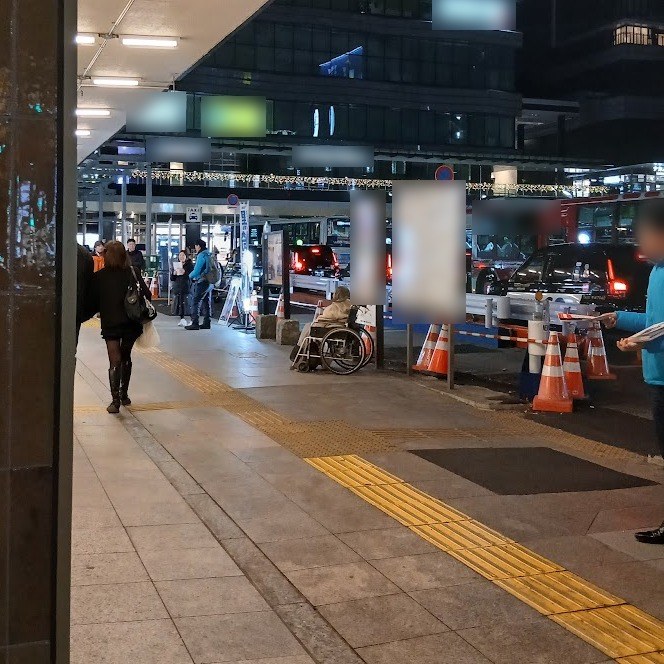
Their gaze was turned not toward the woman right beside them but toward some passerby. In the posture of their appeal, she did not enter their field of view — or she did, and they were trying not to notice.
What I wish for from those we entrust the future to. Listening to a message aimed at the people in front of them, I wondered: just whose speech is this?
4 February 2026
A station attendant was worried about her and had come to speak with her. She said her left leg hurt. "Would you like to go to a hospital?" "Shall I call an ambulance?" we asked, but the answer was "I'm all right."
Her mouth was dry and she couldn't speak well, so I asked whether I should buy her another milk tea. Her eyes lit up. This time I made it a gift. She must have been thirsty; she drank it straight away.
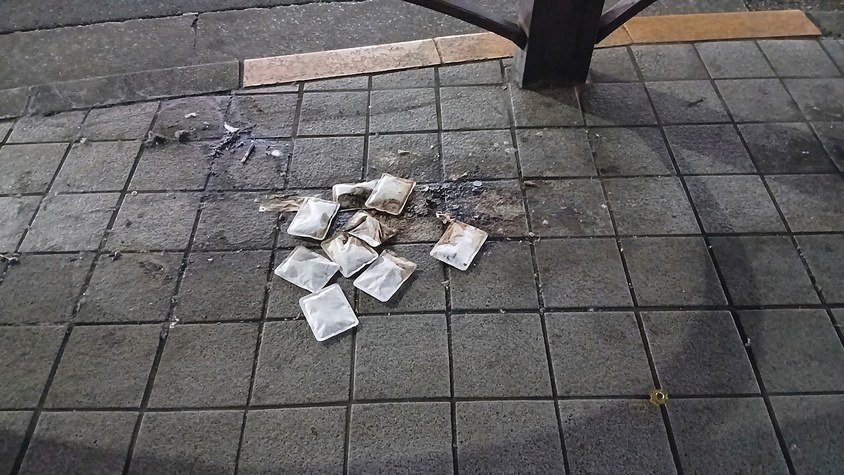
When I asked about family, she answered that she had none. Then she said, "You can't get into a hospital without family." I told her that shouldn't be true, but the answer was again, "I'm all right."
Whether she truly has no family, or whether she doesn't want to be a burden to them, I don't know. There was what appeared to be excrement, and I wondered how far she could move on her own. Should I consult the authorities? But consulting and then calling it finished also felt like something other than right.
Rather than wanting to do something about her, I wanted to stay close to what she wished for. I have worked in aid in developing countries, and yet I did not know what I could do for one woman right in front of me in Japan. That was what ached.
7 February 2026
It was cold enough to worry about snow, and snow did fall in Tokyo. She was not in her usual place; she had moved under the elevated tracks.
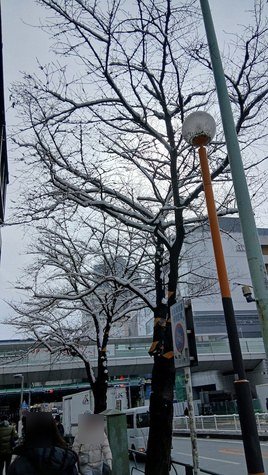
A woman passing by, perhaps in her twenties or thirties, had stopped with roasted green tea and a heat pack. Between that woman and her was a distance of about a metre.
She looked a little angry. "I don't need it," she refused, and about the heat packs she said, "Not many, but I have some." In the end she accepted neither.
I, too, mentioned a community care centre, thinking it might lead to shelter from the rain and wind. "What is a community care centre?" she asked — and then, right away, "No, thank you."
She shifted her seat from time to time and said her hips hurt.
What we hold out in concern is not necessarily what that person wants. Nor is it necessarily wanted at that moment. I don't know why she didn't accept. But I was left thinking about how giving cannot be built on the giver's feelings alone — about distance, dignity, pride.
And I, too, had not managed to ask her name.
13 February 2026 — Red-capped cola, and chocolate
Around eleven at night, on my way home from the gym, she beckoned to me again. She handed me 200 yen, and what she asked me to buy sounded at first like "corn." "Corn potage?" I asked. It was cola. And specifically the one with the red cap — not the black cap.
The next day was Valentine's Day. Since the occasion was there, I bought chocolate too. Her sticky hands were on my mind, so I bought wet wipes as well and asked, "Can you use these?" before handing them over. This time she accepted, and seemed a little pleased.
Perhaps she remembers me, the one in the white coat. From a stranger to a face she knows. Maybe we have become something like acquaintances. Perhaps there are relationships that form slowly.
At the same time, there was a part of me that felt relieved when she was asleep. Today she was sleeping, so I didn't call out. It gave me an excuse not to extend my hand. I noticed that weakness in myself as well.
2 March 2026
I went to the usual place, and she was not there. There was no trace of her left where she used to sit.
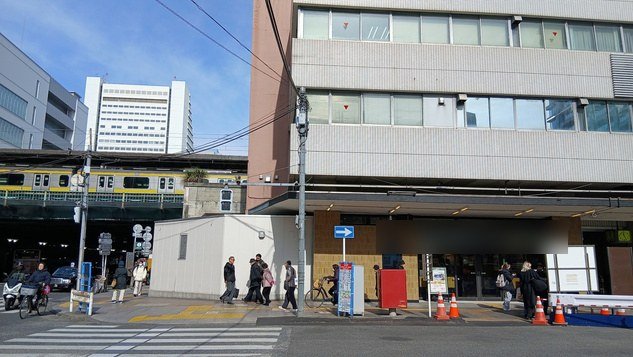
I felt both a small relief and something far more complicated.
What I remember is only her face when she was pleased with that first milk tea.
8 March 2026
Still not here.